Four tools, one platform
Social media managers weren't failing at their jobs, their tools were failing them. I designed around how they actually work, not around how the product assumed they did.
Four fragmented tools consolidated into one coherent product. The insight wasn't about UI, it was about understanding the actual daily workflow before designing anything.
Product Snapshot
This case study documents how research across three user archetypes replaced four fragmented tools with one task-first platform. A real problem was locking an information architecture that could hold 58+ screens without collapsing into inconsistency.
Context
Social media managers across agencies and brands
Juggling scheduling, publishing, and reporting across four separate tools.
Problem
Tool fragmentation, not a feature gap
Users think in tasks, not platforms, the real fix was structural, not visual.
Solution
Task-first information architecture
Locked the IA before visual design, then built one platform around it.
Role
Senior Product Designer
Research, IA, wireframes, and full high-fidelity UI.
Team
Solo design lead
Full ownership across a 3-month build.
Outcome
58+ screens, 4 platforms integrated
Facebook, YouTube, Instagram, and Twitter unified into one workflow.
Scope
Full product system
Research, IA, wireframes, wireflows, and complete UI across desktop and mobile.
Context
SRAX Social targets digital agencies, community managers, and independent creators who run advertising campaigns across multiple platforms. The core problem: each platform has its own interface, metrics, and scheduling logic. Managing four channels meant switching between four tools.
The brief was to design a unified platform: schedule, promote, track, and report, without flattening the channel-specific differences that professional users depend on.
Problem
Social media managers were context-switching between four native dashboards to manage, schedule, and analyze campaigns. No unified reporting made cross-channel optimization guesswork rather than decision-making.
Professional managers think in tasks, not platforms. That single insight restructured the entire information architecture.
Research
The project started with user goal and pain point mapping across three archetypes: agency campaign managers, brand community managers, and independent influencers. Each had different priorities but shared the same core friction.
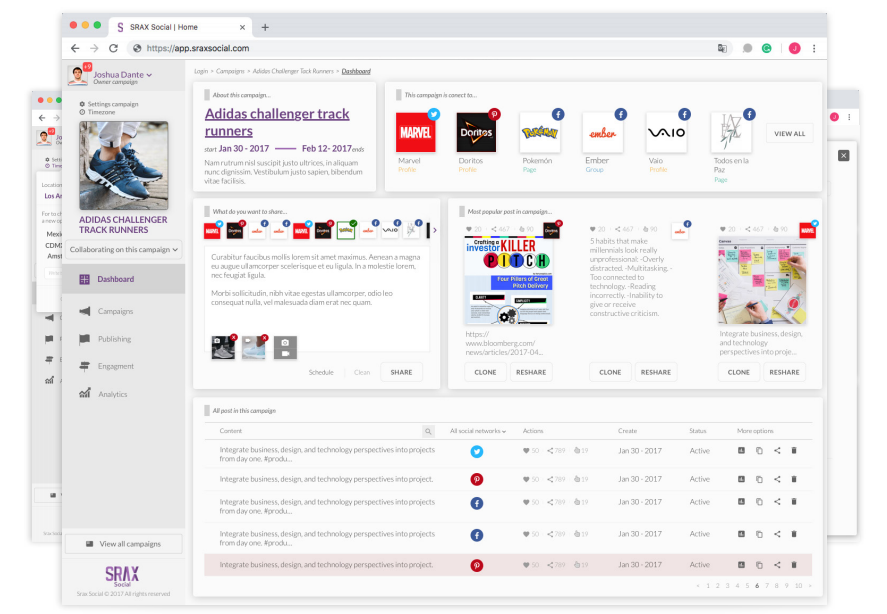

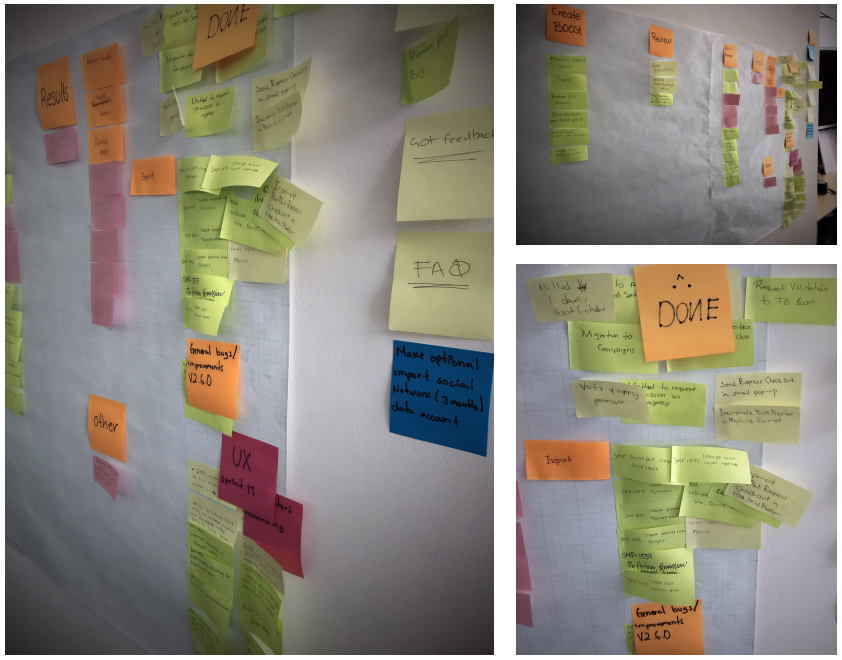
- Three archetypes: agency campaign managers, brand community managers, independent creators
- Primary friction: context-switching between four native dashboards
- Secondary friction: no unified cross-channel reporting for optimization decisions
- Shared insight: task-oriented workflows, not platform-oriented navigation
Low-Fidelity Wireframes
After locking the IA, the wireframe phase covered all screen states, behavioral variations, and edge cases — ensuring the architecture held before investing in visual design.
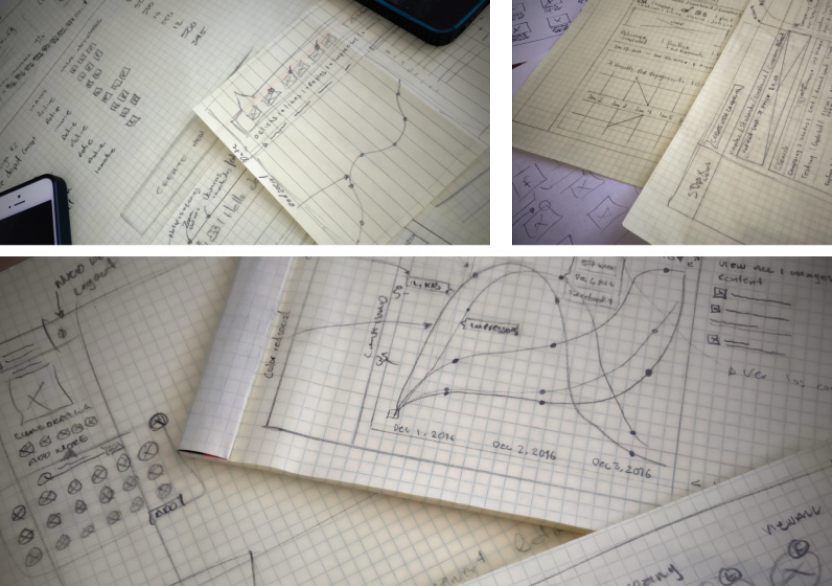
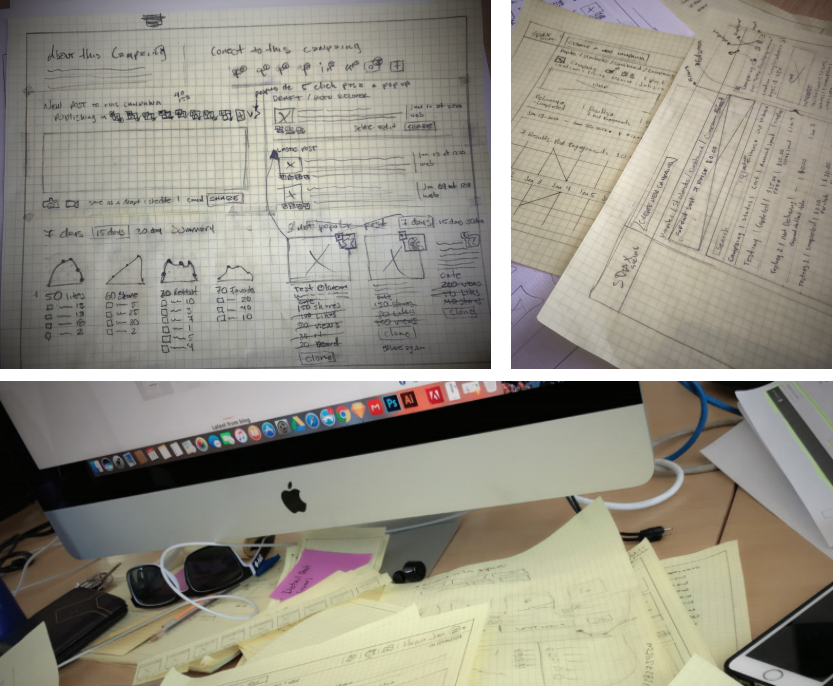
High-Fidelity Design
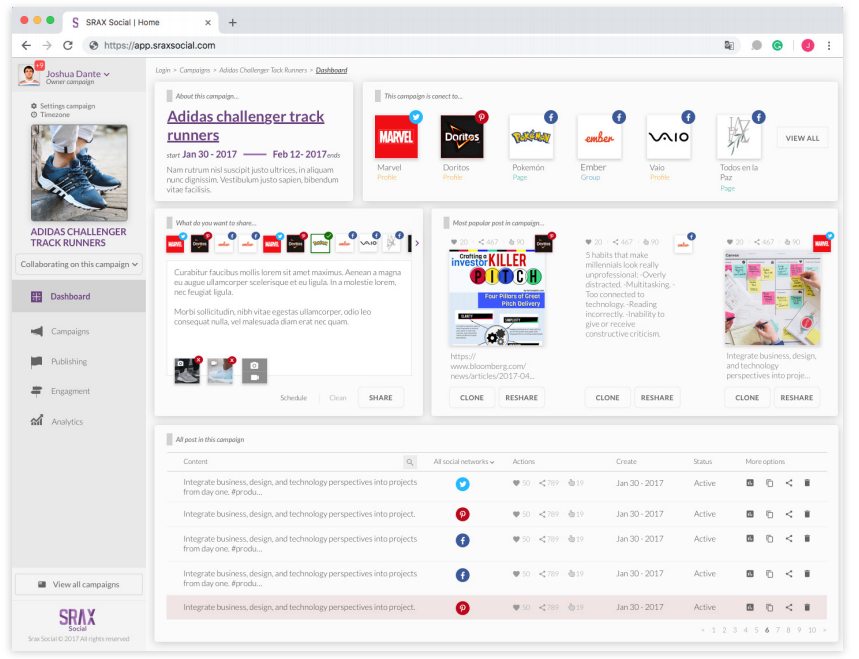
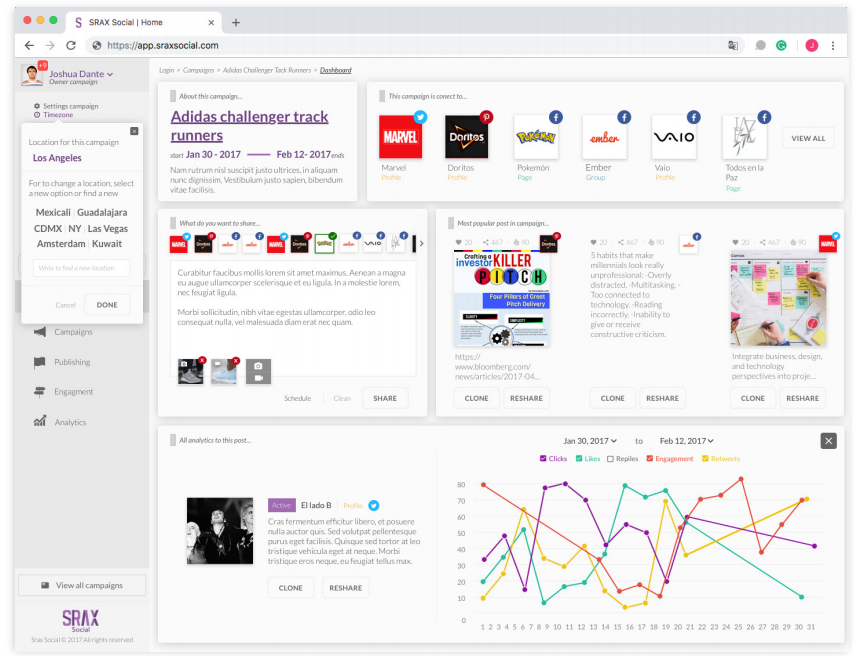
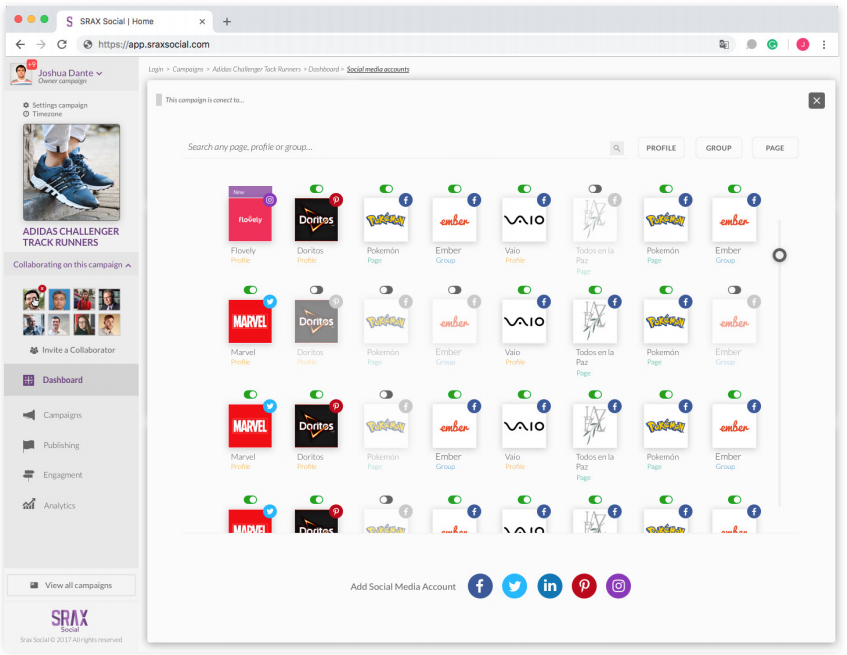
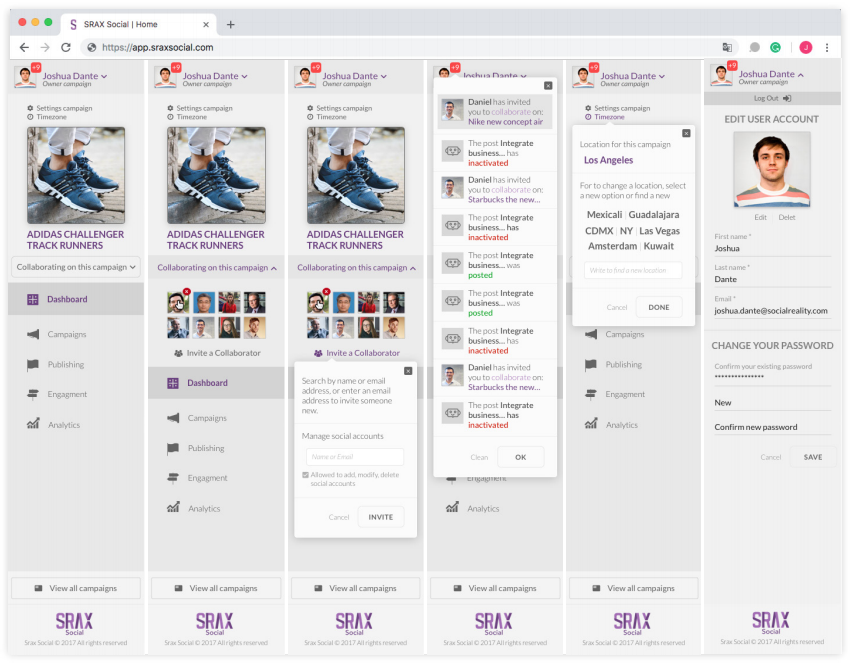
58+ high-fidelity screens mapped the full product context. Task: schedule, publish, analyze, report. Shaped every screen's hierarchy and navigation pattern.
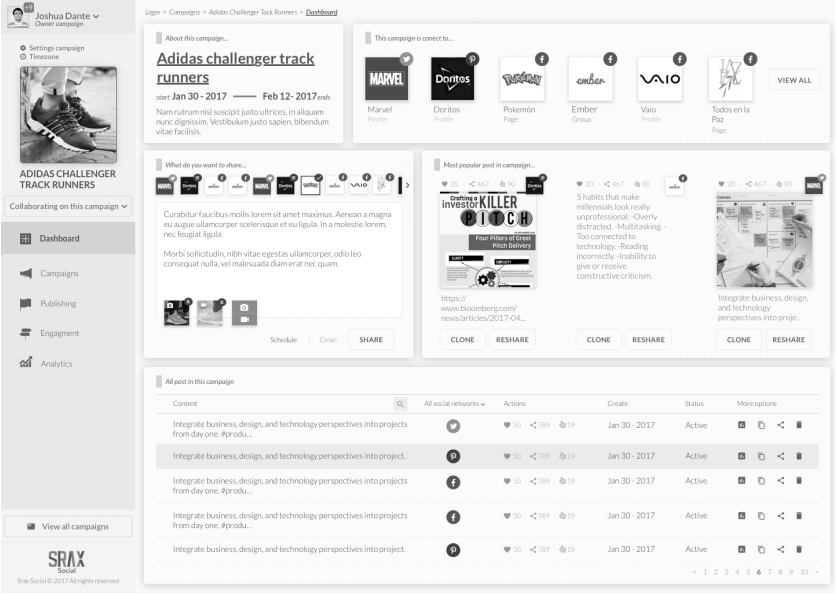
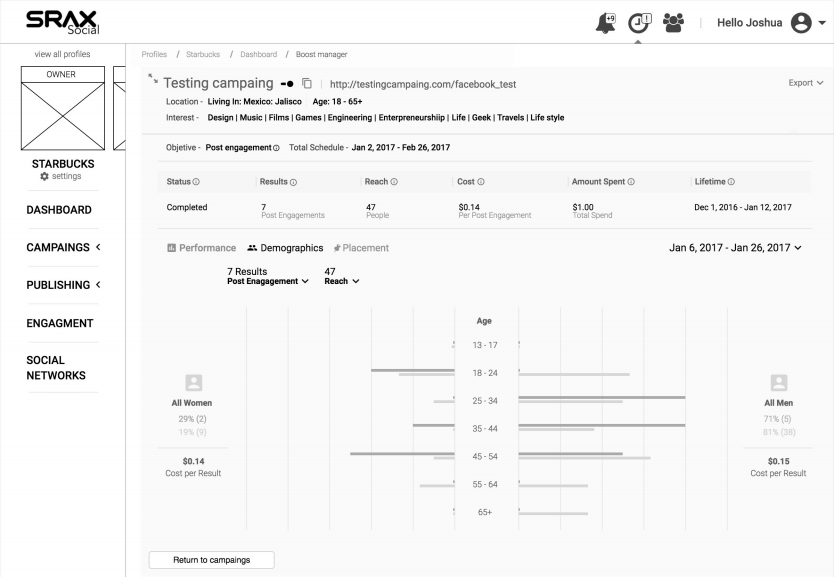
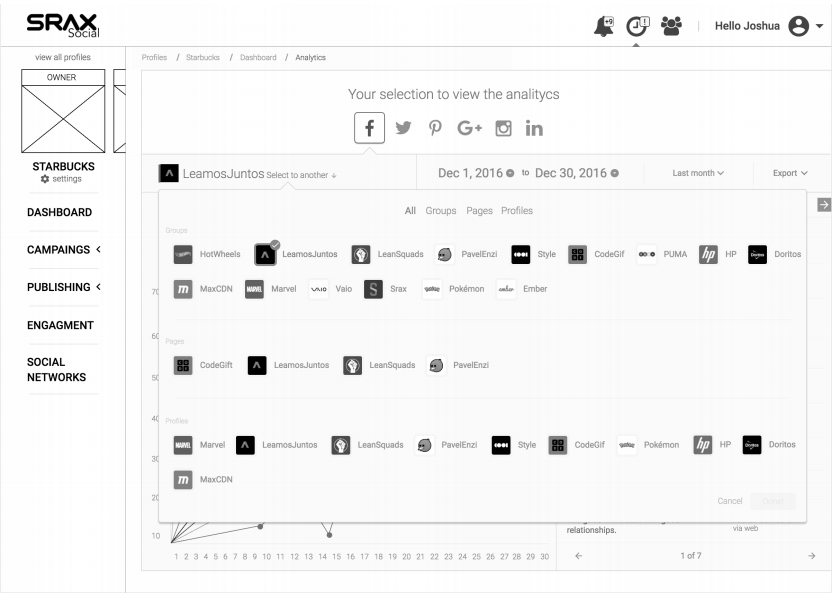
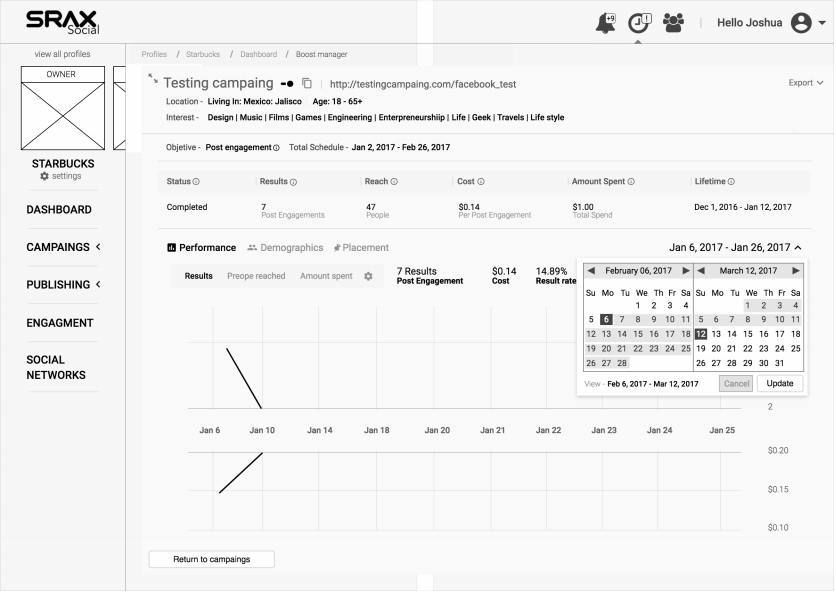

- Task-first navigation: schedule, publish, analyze, report — not platform-first
- Unified content calendar with platform-specific previews inline
- Analytics dashboard designed for cross-channel comparison
- Automation rules: visual condition-action builder
- Implementation guidelines for development handoff
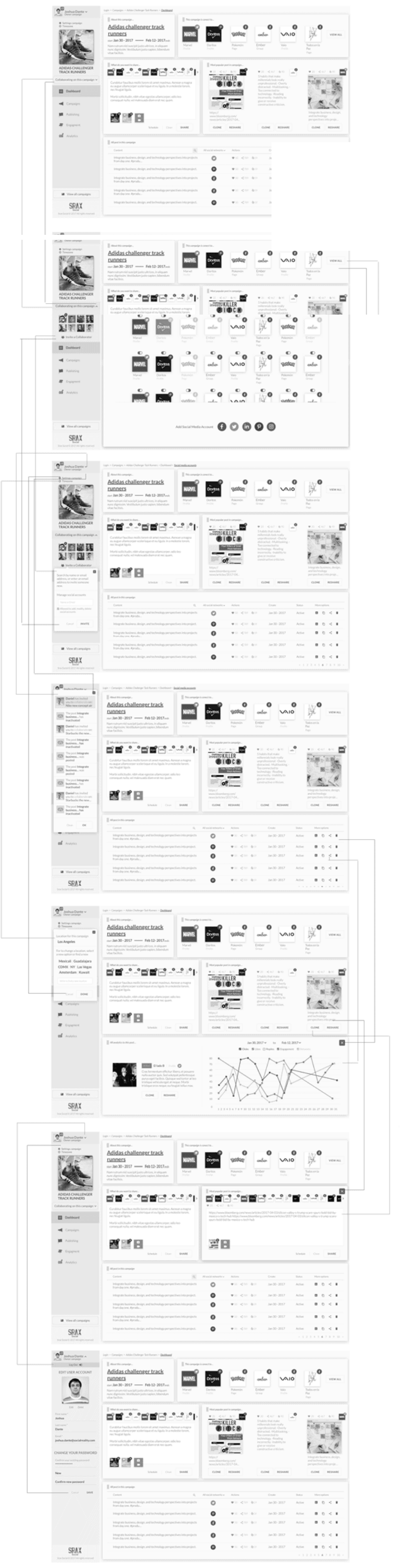
Wireflows
Wireflows documented all platform behaviors and task pathways, ensuring every action a user might initiate had a defined, validated completion path before development began.
Mobile Screens
The platform needed to work across device contexts. Mobile screens focused on the most time-sensitive actions: reviewing scheduled posts, checking live analytics, and responding to performance alerts.
Outcome
SRAX Social launched as a cloud solution with strong early adoption in the social media management category. The platform established a foundation that supported ongoing product scaling and business profitability.
Platform design at scale requires data driven before visual decisions. The 58-screen scope only stayed coherent because the information architecture was locked before wireframing. Scope creep in SaaS products almost always originates from unclear IA, not unclear requirements.